Twa kɔ nsɛm atitiriw so
Log in
Sign up for FREE
arrow_back
Laabri

Algebra 2 7-2 Complete Lesson: Properties of Exponential Functions

star
star
star
star
star
Last updated over 4 years ago
25 Nsɛmmisa
Hyɛ no nsow a efi ɔkyerɛwfo no hɔ:

A complete formative lesson with embedded slideshow, mini lecture screencasts, checks for understanding, practice items, mixed review, and reflection. I create these assignments to supplement each lesson of Pearson's Common Core Edition Algebra 1, Algebra 2, and Geometry courses. See also mathquest.net and twitter.com/mathquestEDU.

10
A.CED.2
F.IF.7.e

10
A.SSE.1.b
F.BF.1.b
…
10
A.SSE.1.b
F.IF.8.b
10
10
10
A.SSE.1.b
F.BF.1.b
10
A.CED.2
A.SSE.1.b
…
10
A.SSE.1.b
F.BF.1.b
F.IF.8.b
10
A.SSE.1.b
F.BF.1.b
F.IF.8.b
5
A.REI.2
5
A.REI.2
5
A.REI.2
10
A.CED.2
F.BF.4.a

10
G.CO.2
10
A.SSE.1.b
F.IF.8.b
100
10
A.CED.2
A.SSE.1.b
…
Asemmisa {{asɛmmisaAhyɛnsode}}
1.

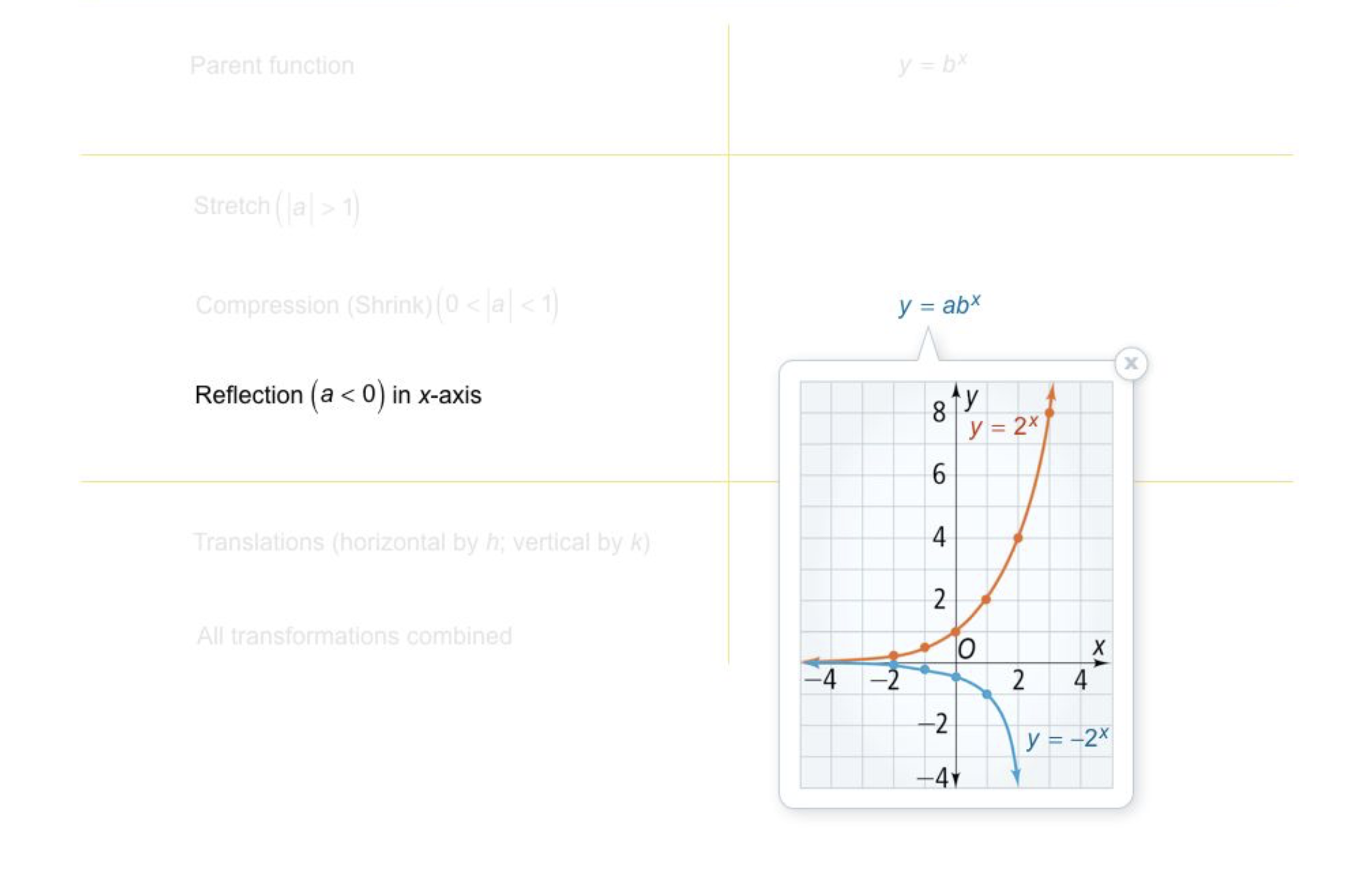
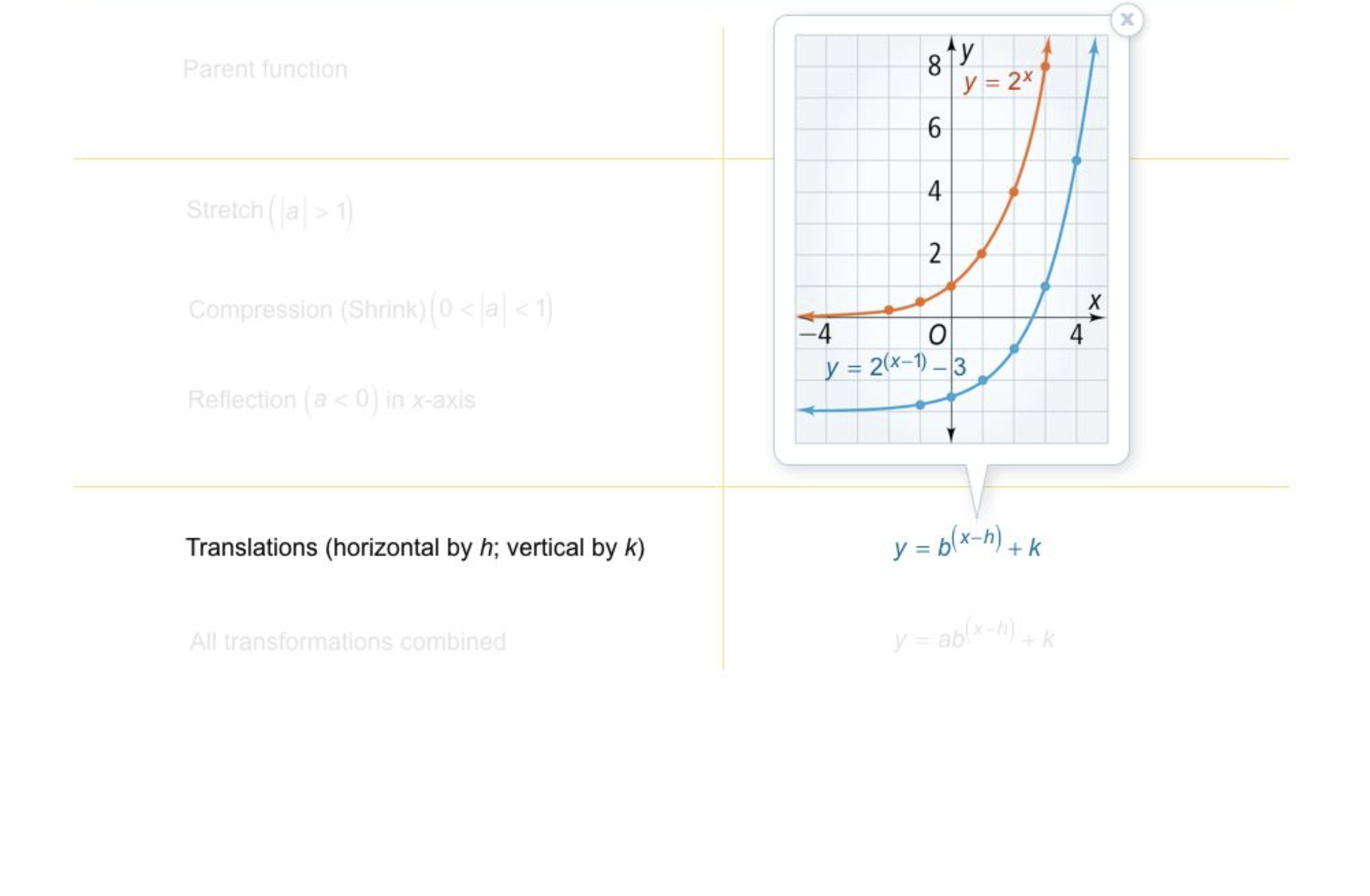
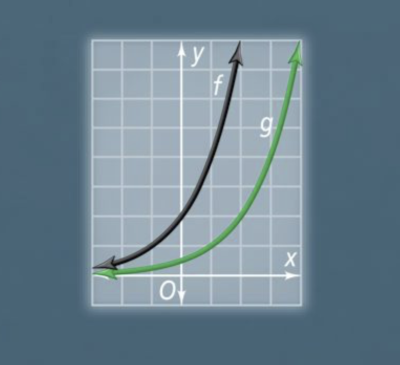
Solve It! f and g are exponential functions with the same base.

Is the graph of g

● a compression,

● a reflection, or

● a translation

of the graph of f ? Or is it none of the above? Select all that apply.

10
Asemmisa {{asɛmmisaAhyɛnsode}}
2.

Problem 1 Got It?

A.CED.2
A.SSE.1.b
…
10
Asemmisa {{asɛmmisaAhyɛnsode}}
3.

Problem 2 Got It?

A.CED.2
A.SSE.1.b
…
10
Asemmisa {{asɛmmisaAhyɛnsode}}
4.

Problem 2 Got It?

A.CED.2
A.SSE.1.b
…
Asemmisa {{asɛmmisaAhyɛnsode}}
5.

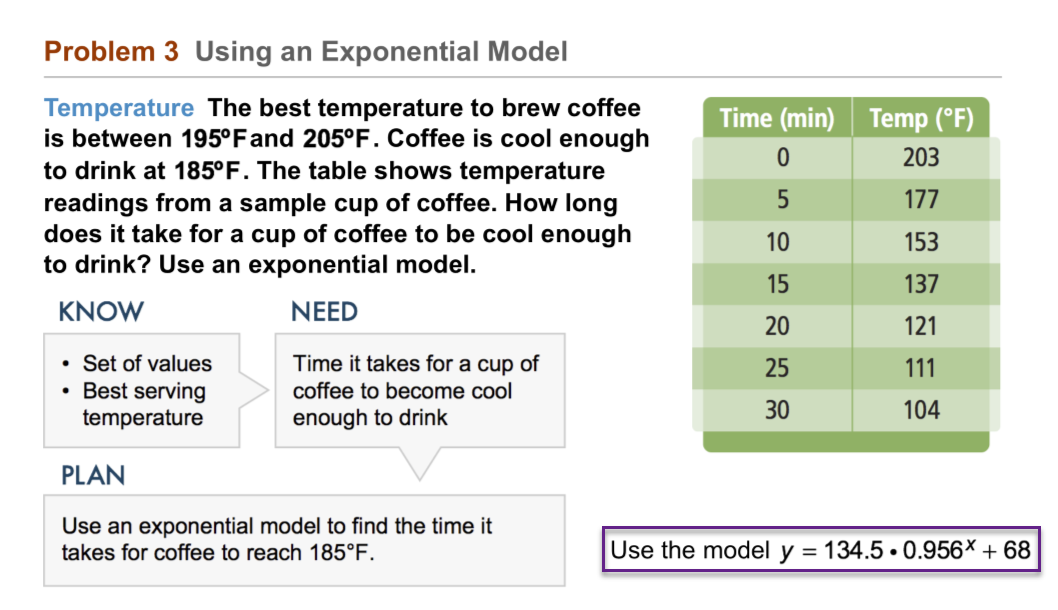
Problem 3 Got It? Use the exponential model from Problem 3.

How long does it take for the coffee to reach a temperature of 100 degrees?

Asemmisa {{asɛmmisaAhyɛnsode}}
6.

Problem 3 Got It? Reasoning: In Problem 3, would the model of the exponential data be useful if you did not translate the data by 68 units? Explain.

Asemmisa {{asɛmmisaAhyɛnsode}}
7.

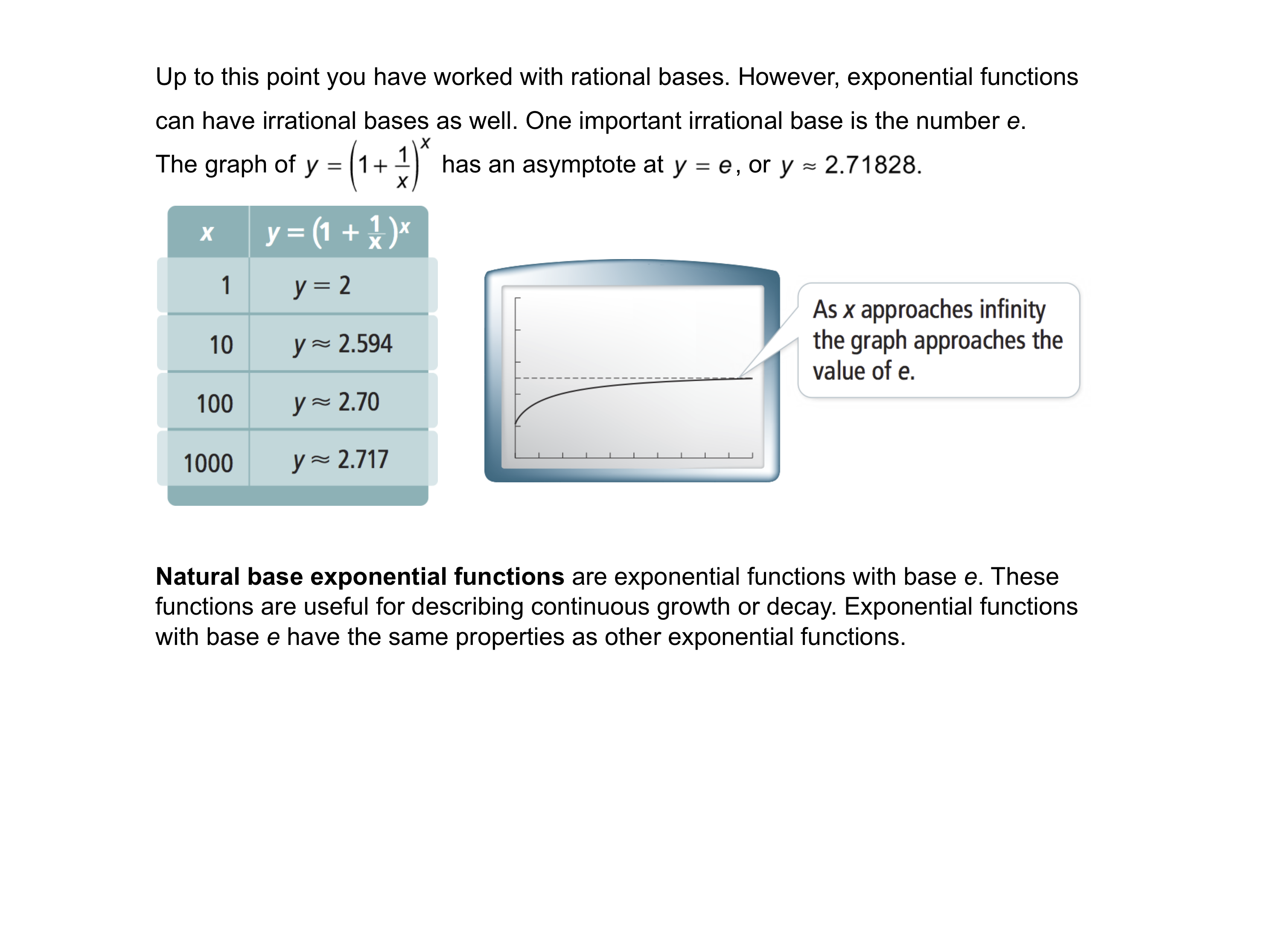
Problem 4 Got It? How can you use a graphing calculator to calculate e8?

Asemmisa {{asɛmmisaAhyɛnsode}}
8.

Problem 4 Got It? Calculate e8. Round to 5 decimal places. Enter only a number with no commas or spaces.

10
Asemmisa {{asɛmmisaAhyɛnsode}}
9.

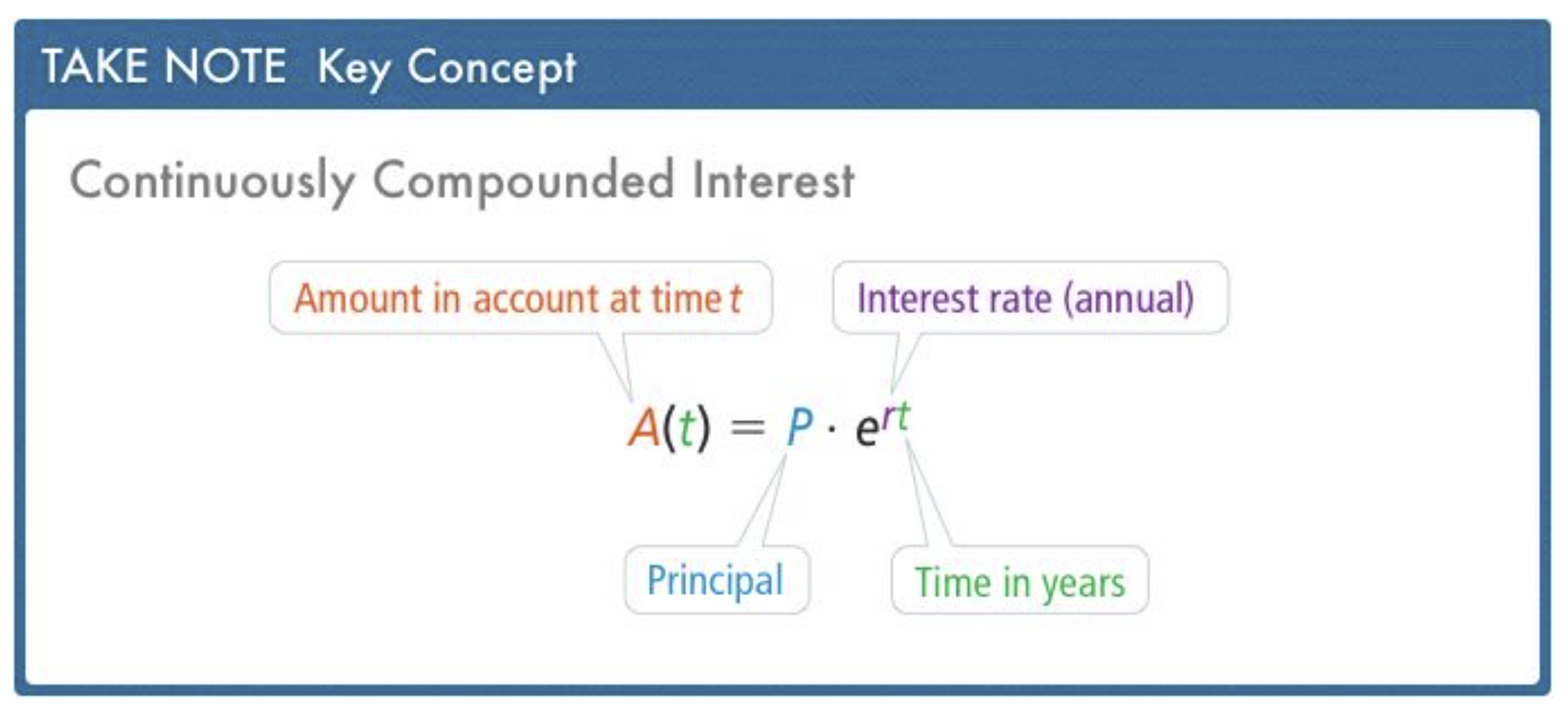
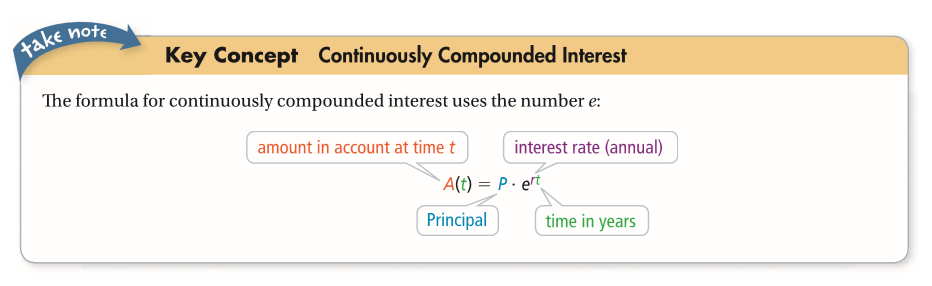
Problem 5 Got It? Scholarships: Suppose you won a contest at the start of 5th grade that deposited $3000 in an account that pays 5% annual interest compounded continuously. How much will you have in the account when you finish high school 8 years later? Express the answer to the nearest dollar.

A.CED.2
F.BF.1.b
10
Asemmisa {{asɛmmisaAhyɛnsode}}
10.

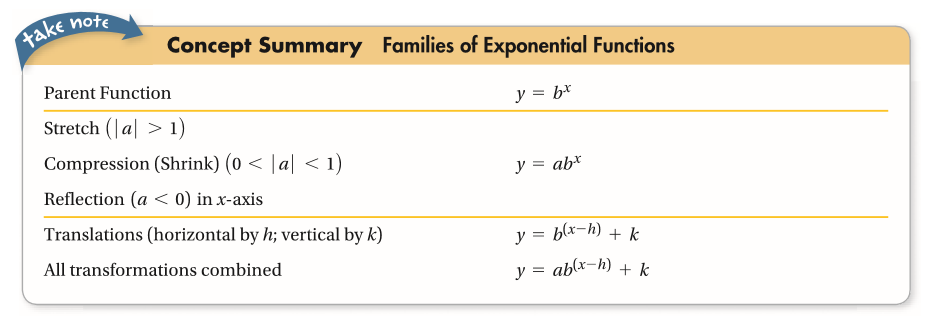
For the function

y = -2 • 3x, identify the transformation from the parent function

y = 3x.

A.CED.2
A.SSE.1.b
…
10
Asemmisa {{asɛmmisaAhyɛnsode}}
11.

For the function

y = ½(9)x, identify the transformation from the parent function

y = 9x.

A.CED.2
A.SSE.1.b
…
10
Asemmisa {{asɛmmisaAhyɛnsode}}
12.

For the function

y = 7(x-5), identify the transformation from the parent function

y = 7x.

A.CED.2
A.SSE.1.b
…
10
Asemmisa {{asɛmmisaAhyɛnsode}}
13.

For the function

y = 5x + 3, identify the transformation from the parent function

y = 5x.

A.CED.2
A.SSE.1.b
…
Asemmisa {{asɛmmisaAhyɛnsode}}
15.

Reasoning: Is investing $2000 in an account that pays 5% annual interest compounded continuously the same as investing $1000 at 4% and $1000 at 6%, each compounded continuously? Explain.

Asemmisa {{asɛmmisaAhyɛnsode}}
16.

Review Lesson 7-1: Without graphing, determine whether the function represents exponential growth or decay.

  • Exponential growth

  • Exponential decay

Asemmisa {{asɛmmisaAhyɛnsode}}
17.

Review Lesson 7-1: Without graphing, find the y-intercept of each exponential function.

  • y-intercept: 2

  • y-intercept: 23

  • y-intercept: 3

  • y-intercept: 5

Asemmisa {{asɛmmisaAhyɛnsode}}
18.

Review Lesson 6-3: Simplify.

Asemmisa {{asɛmmisaAhyɛnsode}}
19.

Review Lesson 6-3: Simplify.

Asemmisa {{asɛmmisaAhyɛnsode}}
20.

Review Lesson 6-3: Simplify.

Asemmisa {{asɛmmisaAhyɛnsode}}
21.

Review Lesson 6-7: Find the inverse of each function on the right and state whether the inverse is a function or is not a function.

  • f- -1 is a function

  • f -1 is NOT a function

Asemmisa {{asɛmmisaAhyɛnsode}}
22.

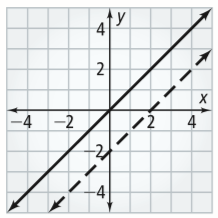
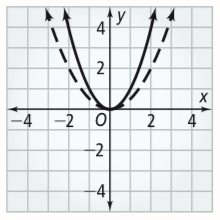
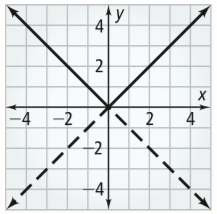
Vocabulary Review: In each graph, the dashed figure is the image of the solid figure after a transformation. Categorize each transformation as a translation, reflection, or dilation.

  • Translation

  • Reflection

  • Dilation

Asemmisa {{asɛmmisaAhyɛnsode}}
23.

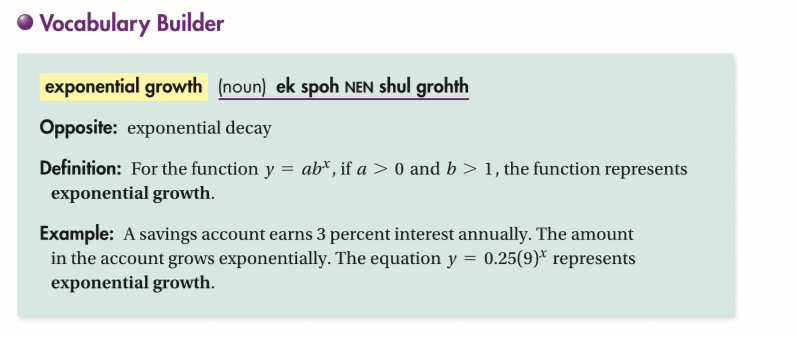
Use Your Vocabulary: Identify the functions that represent exponential growth. Select all that apply.

Asemmisa {{asɛmmisaAhyɛnsode}}
24.

Notes: Take a clear picture or screenshot of your Cornell notes for this lesson. Upload it to the canvas. Zoom and pan as needed.

For a refresher on the Cornell note-taking system, click here.

Asemmisa {{asɛmmisaAhyɛnsode}}
25.

Reflection: Math Success